
13 Spooktacular Brass Band Pieces for Halloween

Updated: 3 hours ago
13 Frighteningly Fun Brass Band Pieces For Halloween

My favourite time of year is almost upon us. For lovers of ghosts, ghouls, tricks and treats, like myself - I’ve put together a list of some fantastically spooky tunes, perfect for including in a halloween-themed concert or for providing a haunting ambience at your Halloween party.
So, grab your broom and don’t forget your pumpkin as we dive into 13 marvellously macabre pieces of music for brass band - *evil cackle*.
Suite Gothique

Written by Leon Boellman and arranged for brass band by the legendary Eric Ball, ‘Suite Gothique’ is a timeless classic that could easily have been used as a soundtrack to a golden age horror movie, like Dracula.
The original work was written as a suite for organ in 1895. Eric Ball has intelligently arranged it for brass band in a way that emulates the dark and sometimes foreboding nature of the piece, whilst showing off the different colours and timbres of the brass band sound - from the dainty melodic cornet lines to the brooding hum of the lower brass. You would be forgiven to think that it was originally written for a brass band; the piece works so well for our sound!
Split into four movements - an Introduction & Choral, Pierre a Notre Dame, Menuet Gothique and a Toccata to finish, it is a piece that is filled with beautiful (and eerie, at times) melodic moments and energetic, mysterious sections. The Toccata in particular wouldn’t have been out of place in a scene from Scooby Doo when the bad guy sneaks up on the gang!
Listen here: https://www.youtube.com/watch?v=M1504ulWqds
Toccata in D Minor

Speaking of Toccatas, name a more menacing melody than that of Johan Sebastian Bach's ‘Toccata in D Minor’. Ray Farr's rock arrangement of this classic work takes it to a whole new level. With a driving drum beat and cinematic energy, this is a cool arrangement that is a firm favourite on many brass band concert programmes.
The Island of Doctor Moreau by Ingebjørg Vilhelmsen

This is a piece I'm hoping gets picked up on the test piece circuit in the UK or the RNCM Festival of Brass, because I really want to hear this performed live. If you haven't heard any of Vilhelmsen's music, you need to get on to Youtube and explore it! She's one of my favourite brass band composers; her music is so fresh, complex and thrilling to listen to and this work is no exception.
The Island of Doctor Moreau is based on the science fiction horror novel by H.G Wells, that tells the storry of Edward Prendick who finds himself shipwrecked on an island dominated by a mad scientist, Dr Moreau. The scientist creates human-like hybrid beings from animals which horrifies Prendick. The novel covers themes of cruelty, moral responsibility and the effects of trauma.
Vilhelmsen's work was commissioned by Manger Musikklag in September 2024 for the 20th anniversary of the BrassWind festival. It takes you through the story with vividly descriptive writing. The hymn-like section toward the end is absolutely gorgeous!
Listen here: https://www.youtube.com/watch?v=FuCPaZQzQts
The Devil and the Deep Blue Sea

The devil isn't just in the name when it comes to this work by Derek Bourgeois - it is a fiendishly difficult piece, but when it's played well it is an evocative masterpiece. With tempestuous storms that are filled with layers of technical semiquaver sequences to flowing melodic lines that paint the picture of the waves calming after the storm - it's a brilliant piece of music that has offered a hellish challenge to bands as both a chosen and a set work.
The Devil and the Deep Blue Sea is a descriptive masterpiece that manages to strike that rare balance between offering both a challenge for the band and ‘listenability’ for the audience.
Listen here: https://www.youtube.com/watch?v=R3hDRvw80lk
Harlequin

Commissioned by euphonium virtuoso, David Childs, ‘Harlequin’ is a solo written by Phillip Sparke. The piece takes inspiration from an early form of theatre that originated in Italy, known as ‘Commedia dell'arte. Harlequin is one of the featured characters and is inspired by the mischievous devil character from medieval passion plays. The piece captures the contrasting playful and dark characteristics of the character and is a firm favourite for euphonium soloists.
It opens with a slow-paced, pensive melody that transitions from a minor into a more hopeful major key. The piece then snaps into life with a vivacious, cheeky and fun-loving technical movement. We are then enveloped in a romantic interlude with sonorous sounds from both soloist and ensemble and beautiful embellishments from soprano and cornets, before we're thrust back into the cheeky theme from the previous section, but elevated to virtuosic technical levels that drives us into a rousing finish.
Listen here: https://www.youtube.com/watch?v=RuE8fHL4ETE
Ghosts, Goblins, Witches and Wizards

This imaginative work from the pen of Darrol Barry is perfect for the spooky season. Written in 2011, it’s a frightfully fun listen with similarities to a soundtrack to a Halloween-themed Disney movie - it definitely reminded me of something from ‘Hocus Pocus’ or ‘Halloweentown’.
The first movement ‘Ghost’ opens with an introduction of haunting solos from tenor horn, baritone and bass before we transition into a melancholic cornet solo. The movement is a combination of cold, spooky melodic lines with whirling, swirling technical sections.
‘Goblin’, the piece’s second movement, is an entirely different vibe; fast paced and mischievous. It does successfully paint the picture of a group of impish creatures going about their fiendish business, probably stealing babies - that’s what goblins do, right?
‘Witches’ reminds me of the flying themes John Williams is known for. The lilting flow of the piece conjures images of crones on broomsticks weaving in and out of villages causing havoc. The bouncy feel of the melodies almost mimics the pulse of a nursery rhyme or an incantation - you could imagine the words of a spell being recited to the tune.
The final movement, ‘Wizards’ opens with a flourish and is a rhythmic, vigorous final chapter to this descriptive work. This movement reminds me a little of ‘The Sorcerer’s Apprentice’ by Dukas.
Listen here: https://www.youtube.com/watch?v=NcV2jLvMwpY
Nightmare from Cry of the Celts

Cry of the Celts is a suite of music written by Ronin Hardiman for Michael Flatley's ‘Lord of the Dance’. Peter Graham was commissioned to write his arrangement of Cry of the Celts by Professor David King for the YBS Band and premiered at the 1997 European Brass Band Gala concert at the Barbican in London.
‘Nightmare’ is the first movement of this suite and it is a dark, turbulent affair, opening with rhythmic percussion and imposing, chordal trombones. It’s a swirling, fearful work that really evokes a feeling of foreboding. This may be the soundtrack to the stuff of nightmares, but the suite is absolutely incredible and I would highly recommend listening to the full thing after you've checked out this track.
Listen here: https://www.youtube.com/watch?v=jdyY0hlNBcY
Slaughter on 10th Avenue

What is Halloween without a little horror? The gutsy storyline behind Richard Rogers’ Slaughter on 10th Avenue’ is a tale fit for the season. The piece was originally written for a ballet for the finale of the 1936 musical comedy, ‘On Your Toes’. It soundtracks the story of a ‘hoofer’ (a dancer, usually an experienced tap dancer) who falls in love with a dance hall girl who is then shot and killed by her jealous boyfriend. The hoofer then shoots the boyfriend.
It’s a brilliant, jazzy number, full of character and drama.
This brass band arrangement by Sandy Smith works so well - I actually prefer it to the original if I’m honest. I think the robust sound of the brass band in full flow, coupled with the intricacies of the solo lines that allows soloists to show off the sweeter, more delicate tiones we’re capable of producing, works better with the story the music portrays. But hey, I’m a brass player, I’m biassed.
If you’re a fan of old Hollywood movie musicals with the likes of Gene Kelly, Fred Astaire, Ginger Rogers and Debbie Reynolds or you like music from composers such as Irving Berlin, George Gershwin or Richard Rogers himself and you’ve not heard this piece - you’ll love it!
Listen here: https://www.youtube.com/watch?v=a2k9TRX9jL4
Fortune's Fool

This is an AWESOME cornet solo written by Stan Nieuwenhuis. Originally composed for cornet virtuoso Harment Vanhoorne, the work is inspired by Shakespeare's 'Romeo and Juliet', in particular the anguish that Romeo feels as he utters the line, 'O I am Fortune's Fool'. It's a cool, jazzy and technically fiendish solo with a dark, sombre but punchy energy. It's the punk of cornet solos. Although not specifically Halloween themed, I feel the macabre tone of the piece matched with the hellish technical passages makes it worthy of this piece.
Listen here: https://www.youtube.com/watch?v=8p3_hqTax24&t=22s
Devil’s Dream Hoedown

Arranged by Sandy Smith, it is what I imagine to be the nightmare that would make Aaron Copland wake up in a cold sweat. As the title suggests, it is very similar to Copland’s Hoedown (it even quotes the ending of the original), but far more down to earth and lighthearted. It’s a short, sweet and slightly corny little whirlwind of a piece that would make a great concert opener.
Listen here: https://www.youtube.com/watch?v=1MzXlLGUJ5k&pp=ygUfRGV2aWxzIERyZWFtIEhvZWRvd24gYnJhc3MgYmFuZA%3D%3D
Puttin’ on the Ritz

You may be asking - how on earth has Irving Berlin’s classic, ‘Puttin on the Ritz’ made it onto a list of Halloween brass band music? Although the piece was originally written in 1927 and published in 1929 and was made famous by the likes of Harry Richman and Fred Astaire, the piece had a resurgence in popularity in 1974 thanks to Gene Wilder and Peter Boyle’s performance of the song in the comedy horror film, ‘Young Frankenstein’.
Stephen Roberts’ bold, full-bodied arrangement is my favourite of this popular tune. It takes the big band energy of the original and turns it up to 11 with a ‘razzy’, raucous ensemble and jazzy solo interludes, as well as a cheeky feature of the melody from Czardas. It’s an incredibly clever arrangement and just as much fun to play as it is to listen to.
Listen here: https://www.youtube.com/watch?v=VdbYIW7Su1U
Top Withens from Three Haworth Impressions by gordon langford

This is a dark, brooding work that depicts the spooky scenery that inspired Emily Brontë’s gothic masterpiece, Wuthering Heights. It is so atmospheric and descriptive that it could be in a soundtrack for one of the many film adaptations of this story. It does conjure up images of an emotionally fraught Heathcliffe, sitting by the fire, alone with his tortured thoughts.
The whole suite is an absolute banger to listen to if you have the time!
Listen here: https://www.youtube.com/watch?v=mMvrD8MoTPA&pp=ygUZdGhyZWUgaGF3b3J0aCBpbXByZXNzaW9ucw%3D%3D
Overture to Phantom of the Opera by Andrew Lloyd Webber, arr. by Keith Wilkinson
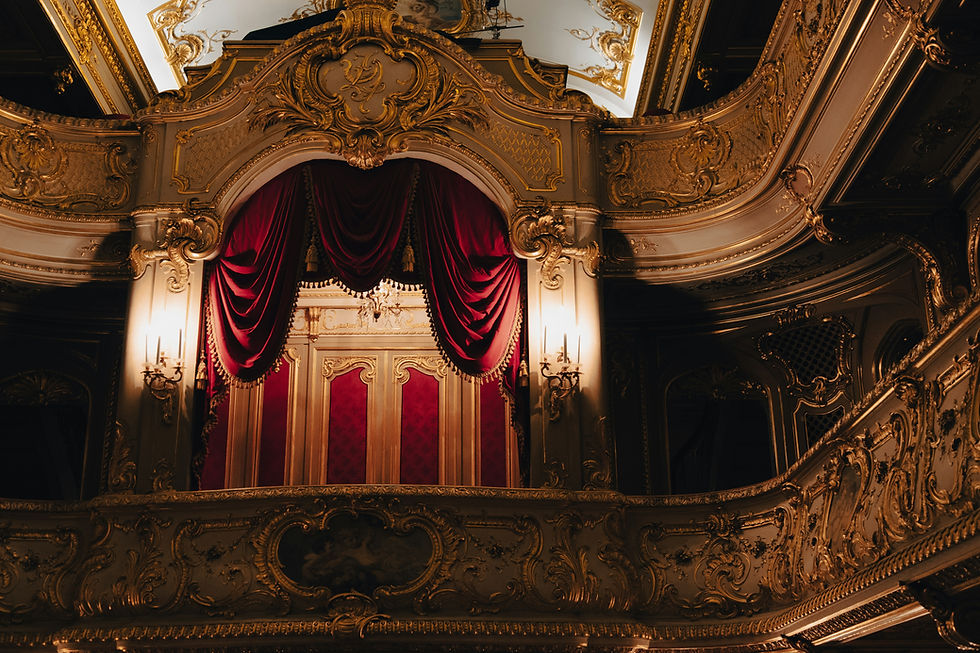
Is there a spookier opening than the frightful, chandelier-wielding introduction to Andrew Lloyd Webber's Phantom of the Opera? Keith Wilkinson's arrangement of this well-known overture brings the drama of the stage show to life, from the iconic descending organ motif to the foreboding main melody presented in the lower brass. It's enough to reveal the brooding phantom from his regular spot in Box 5.
Listen here: https://www.youtube.com/watch?v=1d-bPDao6iI

Comments